
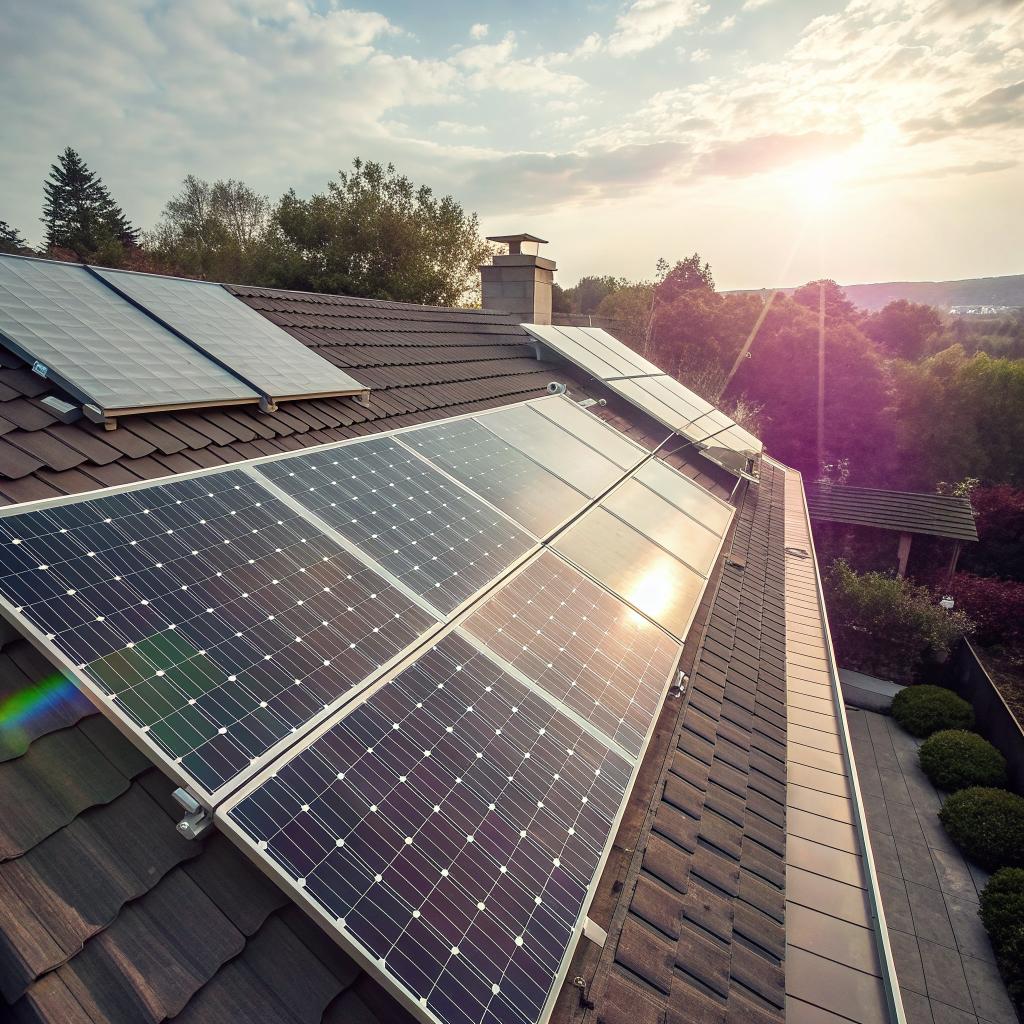
What if I told you the new status symbol in some Pennsylvania founder circles is not a Model X or a YC badge, but a roof full of black rectangles feeding power back into the grid? A lot of tech founders in the state are not just talking about climate or brand image. They are installing solar mainly because the math is starting to look better than another round of paid ads. The short version: the numbers on solar panels in PA finally work for people who think in spreadsheets all day.
In plain terms, tech founders in Pennsylvania are flocking to solar because it cuts burn, hedges against energy shocks, opens tax advantages, and sends the right signal to customers and investors at the same time. For many early-stage teams, the payback period now runs under 7 years, sometimes closer to 4 or 5 if they stack incentives well. That is faster than a lot of product bets. And the risk is lower. Panels just sit there and do their thing.
Let me unpack why this is happening, and why so many software and hardware founders are suddenly studying net metering rules and roof orientations instead of yet another growth framework.
The quiet math: why founders keep reaching for a calculator
Most tech founders are data obsessed. They like clean numbers, clear payback, and simple logic. Solar feels attractive right now in Pennsylvania because of a combo of falling hardware prices, federal tax credits, and electricity rates that are not going down.
Here is where it usually starts. Someone in the founding team asks:
“Why are we paying thousands a month to a utility when we could redirect that into an asset we own?”
That sounds basic, but it hits a few levers at once.
Solar in PA is no longer a feel-good side project; it is a line-item decision that reduces operating costs and anchors financial planning.
Most teams then discover a few facts that change how they think about their office roof or their warehouse.
What the payback looks like in real life
The numbers vary a bit, but let us take a typical small tech company in PA with a modest office or light industrial space. Something like a 20 to 40 person startup, maybe with a lab, light manufacturing, or just a power-hungry server room and a wall of monitors.
A simplified view:
| Item | Typical Range for Small Tech Firm in PA |
|---|---|
| System size | 50 to 200 kW |
| Upfront system cost (before credits) | $120,000 to $450,000 |
| Federal tax credit (ITC, 30%) | Reduces cost by 30% |
| Net cost after credit | $84,000 to $315,000 |
| Annual bill savings | $15,000 to $60,000 |
| Simple payback period | 4 to 7 years |
| Panel life expectancy | 25+ years |
Is this perfect? No. Actual quotes can sit outside this range. Some roofs need upgrades. Some companies add storage. And a few just lease solar instead of buying it.
But for a lot of teams, once they realize that after year 5 or 6 they could be running mostly on “prepaid” power for another 15 to 20 years, the idea stops feeling like a vanity project. It feels more like buying a server instead of renting one forever.
Founders like bets where the worst case is “we saved less than expected,” not “everything goes to zero.”
This is very different from trying a new ad channel, experimental product line, or international expansion. Solar is boring in a good way. You pay, it produces, it keeps producing.
Why Pennsylvania, of all places?
If you live in California or Arizona, you expect solar roofs everywhere. Pennsylvania is less obvious at first glance. The weather is mixed. There are plenty of cloudy weeks. So why tech founders here?
Reason 1: The sun is not as weak as people think
Pennsylvania gets enough sun to make solar work, even if it is not a sunshine postcard state. Many founders who grew up here carry an old mental model that solar is only for deserts or the coasts. Then they see actual production data from a neighbor’s system and the mental model cracks.
Rough annual sunlight comparison:
| Location | Average yearly solar production per kW (rough) |
|---|---|
| Philadelphia, PA | 1,300 to 1,450 kWh |
| Pittsburgh, PA | 1,200 to 1,350 kWh |
| San Francisco, CA | 1,400 to 1,600 kWh |
| Phoenix, AZ | 1,600 to 1,800 kWh |
The gap between Philadelphia and San Francisco is smaller than many think. So a 100 kW system in Philly can still crank out around 130,000 to 145,000 kWh a year. That is a real bite out of a startup’s power bill.
Reason 2: PA electricity prices and volatility
Another nudge: energy costs in PA are not stable. They jump. Tech founders hate random jumps in fixed costs. They like predictable models.
Grid electricity prices in PA have trended upward over time. Certain rate hikes come with short notice. That makes long term planning frustrating when your office has a big server closet, test benches, or 3D printers running for prototypes.
Solar flips that a bit. You take a chunk of your power needs and lock them in once you install. There are still grid charges and demand charges, but a decent solar system can meet a large share of your kilowatt hours over the year.
I know one founder in the suburbs of Pittsburgh who got tired of explaining sudden utility spikes to his board. He finally said, “I would rather argue once about a capital project than every year about random utility hikes.” They installed solar on a warehouse roof. Now, when prices jump, the team at least feels less exposed.
Reason 3: Incentives that actually matter to startups
The big one is the federal investment tax credit, which sits at 30 percent for many systems. For a profitable startup or a company that crossed into real revenue, that tax offset is not theoretical. It changes cash planning.
Then you have:
- Depreciation schedules that let you recover costs faster
- State-level programs and performance payments that can add extra savings
- Occasional local grants or softer support from city programs that like “green” projects
Founders who already live in spreadsheets notice these layers. If you are doing R&D tax credits, equipment depreciation, and other tax planning, solar slots into that mindset.
Solar feels natural to founders already used to stacking tax credits and depreciation strategies to stretch runway.
The founder mindset: control, optionality, and story
If you talk to tech founders long enough, you hear the same themes: control over destiny, flexibility, and narrative. Solar taps all three.
Control: fewer random surprises
Running a company feels like juggling while someone moves the floor. You do not control customer budgets, investor moods, talent markets, or regulation. The list of things outside your control is long.
So when a founder sees a line item that can be stabilized for 20+ years, that feels calming.
Solar will not remove all power costs, but it can:
- Reduce exposure to future rate hikes
- Lower monthly bills after payback
- Increase resilience if paired with storage
Some founders also like the idea that if the grid has issues, they at least have part of their own generation setup in place. Add a battery later and you have backup power for servers or critical equipment without dragging a generator out of a shed.
Is it perfect prep for every outage? No. But it is better than nothing, and tech teams do not love downtime.
Optionality: solar as a platform decision
Many founders think about their physical space the way they think about codebase decisions: what does this unlock later?
Solar creates a few options:
- You can add batteries later without redoing everything
- You can layer in EV chargers for company cars or employee vehicles
- You can negotiate different power contracts because your load shape changes
- If you buy the building, solar can increase resale value
I know one small SaaS team in central PA that had no EVs when they installed solar. They just wanted lower bills. Two years later, they added two EV chargers as a perk. Almost no extra planning needed because the electrical work was already halfway there.
The point here is not that every startup needs a solar-powered EV fleet. It is that founders value choices. Solar gives a new set of levers that a plain old utility contract does not.
Story: customers and investors care, even if you roll your eyes
Some founders shrug at ESG talk, at least in private. But they admit that enterprise customers, especially in Europe and large US companies, now ask real questions about energy and emissions.
Investors also look more at this space. Not for moral reasons only. They think about:
- Regulatory risk if carbon pricing grows over the next decade
- Brand strength for hiring and retention
- Long term operating cost structure
So when a founder can say:
“We run our offices and lab primarily on solar, here are last year’s numbers.”
That is short, concrete, and credible. No fluffy slogans. It helps in sales decks, recruiting, and board meetings.
Some founders pretend this is just a side benefit. Others admit they enjoy having something real to point to when they claim they care about more than ARR.
Remote work, hybrid offices, and why roofs suddenly matter again
A few years ago, a lot of tech companies downsized offices. People assumed remote work would kill the appeal of making physical upgrades like solar. It did the opposite in some cases.
Smaller space, higher intensity
When teams shifted to hybrid setups, the office turned into:
- A collaboration hub
- A lab for hardware or testing
- A studio for content or customer demos
These activities often draw more power per square foot than a plain room of desks. Think high-resolution displays, streaming kits, robotics benches, local servers, 3D printers, or test rigs that run all day.
So you end up with a smaller footprint but still serious energy needs. That is perfect for solar, because the roof-to-load ratio can look better. You are not wasting roof area on people who are never there.
I met a founder in Philly who cut office space by 40 percent after going hybrid, then realized the smaller roof could still host enough panels to cover about 60 percent of their annual use. They could have chased cheaper rent in a random building, but instead decided to sign longer in a place that allowed them to install solar and build from there.
Ownership vs leasing: the startup twist
In big cities, many startups lease their space. They do not own the roof. So the obvious question is: “Why would a tenant bother thinking about solar?”
This is where models like power purchase agreements or landlord partnerships come in. Sometimes the building owner handles the install and the tenant locks in a fixed energy rate over time.
It is not always clean. Negotiations can drag on. Some landlords are skeptical. But founders who are used to negotiating data center contracts, vendor terms, and stock option plans often feel comfortable poking at this.
In some cases, a strong tenant who can show a long runway or solid backing actually convinces a landlord to invest in solar on the roof because it strengthens the building’s profile. The founder gets more stable power costs. The owner gets a more attractive property.
Is this trivial? No, not at all. But tech founders are used to complicated deals. So they are often the first group in a building to push for solar and not just accept whatever the utility sends each month.
The culture piece: what solar says about how you run a company
There is also a softer side to all this that numbers do not fully capture. Solar sends signals inside a company.
Engineers like tangible systems
If your team is full of engineers, designers, and product thinkers, many of them secretly enjoy working on things they can touch. Not everything in their life should be a Figma board or a Git diff.
A solar install, for a tech team, often turns into:
- Dashboard building: real-time dashboards for output, savings, CO2 avoided
- Experiments: adjusting usage patterns to match production curves
- Data projects: forecasting, anomaly detection for panel output, and so on
I know a developer who set up a little dashboard on a spare monitor next to the coffee machine. It shows current solar output, daily production, and power exported back to the grid. People look at it, point at spikes after a cloud moves, and talk about “our” power.
Solar becomes part of the company’s daily environment, not just a line on a bill.
Hiring and employee expectations
Younger engineers and designers often ask more pointed questions about environmental impact. They will not always choose a job based on solar roofs, but they connect the dots.
If a founder claims to care about long term thinking and resource use, yet the office is wasteful and powered by the dirtiest sources available, that feels off. Installing solar is a small but visible step that lines words and actions up a bit.
Some employees will not care. Others will care a lot. But it rarely hurts in hiring to show a concrete project where the company actually changed how it uses resources.
And from what I have heard, many founders are just tired of hand-wavy sustainability slides. They prefer showing a photo of their roof, their dashboards, and last year’s energy report. It is quieter, but more convincing.
The risk side: where founders get nervous and push back
Not every founder is running to sign a solar contract. Some concerns are valid, and honestly, I think a few are under-discussed.
Capital tradeoffs
Solar systems soak up capital or credit. For a seed-stage startup that is still figuring out product-market fit, that can be a bad idea. If $150,000 on solar means one less engineer or a delay in a critical launch, you probably should not do it yet.
Some founders solve this with financing structures that smooth costs over time. But not all deals are equal, and some stretch out payback so far that the benefits shrink.
This is where a hard conversation is needed:
Before installing solar, a founder needs to ask whether this is the best use of the next dollar compared to product, sales, or hiring.
I have seen founders apologize for not going solar because they felt social pressure. That is not helpful. Sometimes the honest move is to wait 2 or 3 years, grow, then invest when the company can absorb it easily.
Roof condition and building uncertainty
If your lease ends in 3 years, and your roof is old, solar might not be a smart idea yet. Panels often last 25+ years. Roofs do not. Taking them off for roof work costs money.
Founders who embrace solar too quickly can paint themselves into a corner if:
- They expect to outgrow the space soon
- The landlord will not commit to long term arrangements
- The roof is in questionable shape
The more stable your space plans are, the stronger the case for solar. If you are in one of those “we have no idea where we will be in 18 months” phases, it might be smarter to plan, gather quotes, and wait a bit.
Complexity fatigue
Founders already juggle:
- Fundraising
- Product roadmaps
- Compliance and security
- Hiring and culture
Adding another large project can feel overwhelming. Solar is not plug and play. There are permits, interconnection steps, contractor choices, and financial modeling.
That said, many founders who actually went through it report that it felt easier than they feared, at least once they picked a reputable installer. The planning work is front-loaded. After that, panels just sit there doing their thing while you get back to shipping.
How tech founders in PA are making solar decisions step by step
If you are a founder wondering how others are structuring this decision, the pattern often looks like this, with some variation.
1. Rough pre-check: does solar even make sense?
Before any quotes, founders often sanity check a few basics:
- Is our building roof mostly unshaded?
- Do we have control of the roof, or a landlord open to working with us?
- Will we stay in this location long enough for payback to make sense?
- Do our power bills justify the effort, or are we talking about tiny amounts?
If any of these answers look bad, they pause. If most look ok, they move ahead.
2. Gather real quotes and production estimates
This is where the guesswork starts to fade. Installers will:
- Look at your last 12 months of utility bills
- Check your roof layout with satellite images and site visits
- Propose system sizes with estimated yearly production
Founders compare a few options, run spreadsheets, and ask the usual questions: payback period, cash vs financed, warranty support, and so on.
Some tech founders also ask for raw production data from other local installs, so they can see reality instead of just simulations.
3. Work with finance and tax advisors
The tax side is real money. Misunderstanding it can cost a lot. So founders often pull in:
- Company CFO or part-time finance lead
- External accountant familiar with energy projects
Together they look at:
- Federal ITC timing
- Depreciation benefits
- Impact on cash flow and runway
- How to reflect this on the balance sheet for future investors or lenders
It is not glamorous, but these boring conversations often convince skeptical board members who only care about numbers.
4. Tie solar into broader office and infrastructure plans
Founders who do this well do not treat solar as a random one-off. They fold it into other planned changes, such as:
- Upgrading HVAC to smarter systems
- Moving to LED lighting and better controls
- Adding EV chargers for future use
- Planning for server or lab expansions that might influence load
This keeps them from doing work twice. It also avoids messy surprise costs when someone realizes the electrical panel was undersized.
5. Build a light internal story around it
The final step sounds fluffy but matters more than many admit. Good founders share:
- Why they chose solar
- How much they expect to save over time
- What the team can see on dashboards and how they can engage
This makes solar part of the company’s shared story, not just a top-down decision.
In one PA startup I heard about, the founder tied a tiny yearly bonus pool to energy savings. If the company outperformed expected solar production and kept consumption efficient, the team got a small extra payout. That kind of thing fits how many tech people think: numbers, goals, feedback.
Is solar in PA only for “grown up” startups?
Short answer: not only, but timing matters.
If you are at idea stage or pre-revenue, solar is probably not your best use of funds. You could still talk to your landlord about their plans, but you have bigger problems than your power mix.
Once you are profitable, or at least stable with real revenues and a clear path ahead, the case gets much stronger.
A practical rule some founders quietly use:
If the payback period for solar is shorter than the average time it takes us to reach payback on core product bets, we take the solar deal seriously.
In software, many product sprints do not clearly pay back in 4 to 5 years. They are more speculative. So when they see a solar model that pays back in that timeframe with low downside, it starts to look very sensible.
That said, there are exceptions. Deep tech founders building energy-related products might install solar early even as a testbed. Hardware teams might need custom power setups anyway, and solar folds in naturally. So I do not think there is one rule for everyone.
What should a tech founder in PA ask before saying yes?
Let me end with a simple Q&A, because many founders circle around the same questions in conversations.
Q: If I am a founder, what is the first honest question I should ask myself about solar?
A: Ask whether committing money or credit to solar right now will slow down anything more critical to your company’s survival. If the answer is yes, then you might be too early. If the answer is no, and your financials look comfortable, then solar deserves a careful look.
Q: Will my team actually care that the office runs on solar?
A: Some will care a lot, others will shrug. But you might be surprised how many engineers enjoy seeing real-time production data, and how many candidates mention it in interviews once you start including it on your careers page or office tour. It will not fix culture problems, but it is one tangible signal that you think beyond the next quarter.
Q: What is the biggest mistake you see founders make with solar in PA?
A: Rushing into it without aligning lease terms, roof condition, and long term space plans. The second biggest: treating solar like a marketing project first and a financial project second. If the numbers do not work, no slogan will rescue it.
Q: If electricity prices somehow drop in PA, do I regret installing solar?
A: You might see a longer payback, and some expected savings may shrink. But panels still produce power you do not pay the utility for, and they still signal stability and long term thinking. The real regret usually shows up when prices go up and founders who could have installed solar years ago are stuck watching the increases with no hedge in place.
Q: Why are so many of my founder friends only talking about this now?
A: Because the combination of mature tech, better pricing, federal credits, unstable energy costs, and growing pressure from customers and investors reached a tipping point. For a while, solar felt like a “nice to have.” In PA, it now lives in the same conversation as hiring and hardware choices for many tech teams. It slipped from philosophy into operations, quietly.
And that is probably the real story: solar in Pennsylvania stopped being a bold statement and turned into a practical line item that smart, slightly tired, spreadsheet-loving founders keep choosing.