
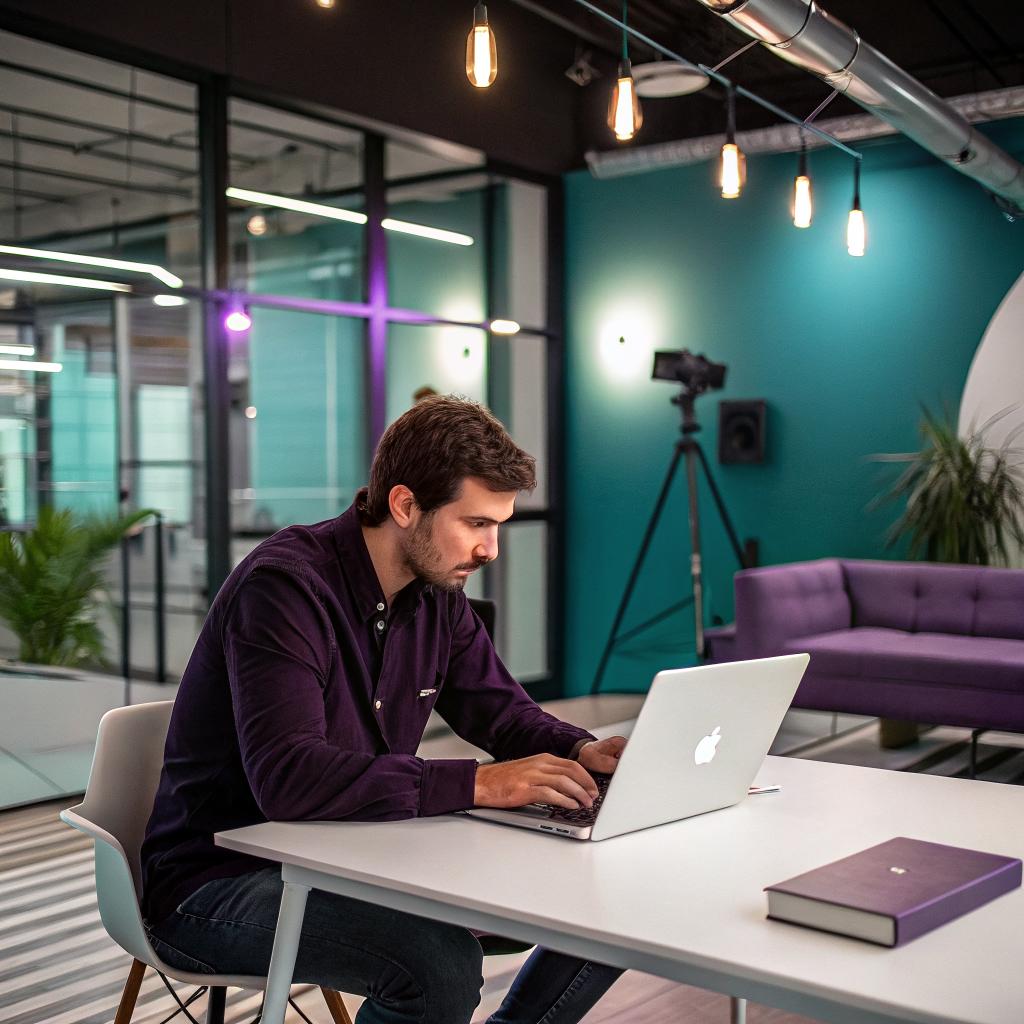
What if I told you that your office decor might be doing more damage to your product roadmap than your bug backlog? That the wrong lighting, cluttered walls, or the absence of one small ritual could quietly slow a team more than a missing feature?
The short answer: founders who treat their space as part of the product build better companies. And this is where Saunni Bee comes in. Her work gives tech founders simple, physical tools to design rooms that calm the nervous system, support focus, and make hard conversations easier to have. She is not trying to turn your office into a showroom. She is trying to give your brain a place where it can actually think.
Why a creative space matters more than another growth hack
I know this sounds a bit soft. You might be thinking: “We ship code, not candles.”
Fair. But look at a regular week in a young startup. Long calls. Hard trade‑offs. People working late in the same chair, staring at the same wall. The space you sit in for that grind is not neutral. It nudges you, one way or another.
Your space is either adding friction to every decision, or quietly removing it. There is no neutral setting.
If your office hums with harsh light, cluttered desks, random swag, and noise, you can still build a company. People do it. But you pay a hidden tax in burnout, poor focus, and shallow thinking.
What Saunni Bee does is not magic. It is very grounded:
- She uses slow, steady sensory cues so founders feel calmer and think clearer.
- She anchors rituals in physical objects so your team has something real to gather around.
- She treats your office as a tool, not a trophy.
This matters to anyone in tech because your main asset is minds that work well under pressure. A space that helps those minds, even a little, compounds over time.
From generic office to creative studio: what changes
Most tech offices look similar: white walls, LED lighting, the same sit‑stand desks, a glass meeting room, some plants if someone cared enough.
Nothing is wrong with that. It is just not intentional.
A creative space for founders does something different. It answers a simple question: “What kind of thinking should happen here?” Then it supports that answer.
Here is what tends to change when founders work with someone like Saunni:
1. The space starts to match the work, not the lease
Founders doing deep product work need quiet, safety, and a sense of control.
Sales‑heavy teams need energy, visible momentum, and a place to reset between calls.
If you mix those needs in one boring open plan, someone loses. Often everyone does.
Saunni asks things like:
- Where do the most important decisions happen?
- Where do arguments usually break out?
- Where do you feel stuck most often?
Then she shapes rooms around those patterns. A shared table might move away from the path to the kitchen. A corner that collects dead hardware might become a thinking nook. Lighting changes. One wall becomes a planning wall instead of a logo wall.
It sounds small, but watch what happens when the product team has a corner that clearly says “this is where serious ideas live.”
2. Meetings stop feeling like punishment
Most founder meetings are too long, too vague, and held in rooms that feel like holding cells.
Saunni nudges teams to think about what people smell, see, and touch when they walk into a meeting. Not in a fancy way, just in a human way.
Here is a simple change she often pushes for: a small, consistent ritual at the start of important meetings. Light a candle in a wall sconce, close laptops for a minute, and let everyone arrive.
That 60 seconds can change how the next 60 minutes feel.
How physical objects shape founder thinking
Tech people often live in abstraction: Figma, Notion, terminals, dashboards. It is easy to forget that our nervous systems did not evolve for 10 hours of screen.
Physical objects pull us back into our bodies. Done with intention, they lower stress and make complex work feel a bit more human.
Saunni uses things like candle sconces, candle lanterns, and even garden stepping stones in a way that sounds strange at first, but starts to make sense once you sit in a room she has shaped.
Candle wall sconce: a tiny decision reset button
A candle wall sconce is simple. A candle on the wall, at eye level, usually near where serious conversations happen.
Why would a founder care?
Because you can tie that candle to a rule:
“When this candle is lit, we are in decision mode. No phones, no Slack, no half‑listening.”
You might think that is too symbolic. I thought that at first. Then I saw how teams responded to a clear, visible signal that said: “This time matters.”
The flame gives people a fixed point to glance at when tension rises. It sounds a bit dramatic, but in practice it just gives the eyes a break from faces and screens. That small pause helps people speak more carefully and listen longer.
A few practical ways founders have used a candle wall sconce:
- Weekly leadership check‑in. Candle lit only while the core agenda runs. If the conversation drifts or gets petty, someone quietly snuffs it. It is a reset.
- Co‑founder 1:1s. The candle marks a space where both agree to talk as human beings, not just as roles.
- Hard decisions. Product kill calls, big hiring choices, budget cuts. The candle signals gravity without theatrics.
Is a candle required for good decisions? Of course not. But it creates a gentle ritual that your brain starts to respect. Over time that helps.
Candle lanterns: guarding deep work time
Open office? Or working from a small apartment where your partner also takes calls? Focus is tough.
Candle lanterns are portable, which makes them useful as a personal deep work signal. Founders who work with Saunni often adopt a simple habit: when the lantern is lit, they are in “builder mode.”
The rule:
“If my lantern is lit, treat me as if I am in a meeting with our most important customer.”
You can use a physical lantern on your desk, or a safe version if your building has rules. The point is the visible cue.
A few real patterns that tend to show up:
- Morning product block. Light the lantern at 9am, put phone face down, and commit to 90 minutes of focused work.
- Maker hours for engineers. The team agrees on shared “lantern hours” where interruptions drop.
- Thinking walks. Some founders even use a small lantern on a balcony or porch as a marker: “This is where I think alone for 15 minutes before reacting to anything.”
These objects are not about vibes. They are about protocols. Tech teams already use signals in code and tools. This is just extending the idea into the environment.
Garden stepping stones: mapping your founder journey
This one sounds the most odd at first. Why would a tech founder care about garden stepping stones?
Because they can hold milestones in a physical line that you actually walk.
Some founders who work with Saunni place a row of stepping stones in a small outdoor area or along a quiet hallway. Each stone carries a moment:
- First paying customer
- First layoff
- First major outage
- First profitable month
You walk that path sometimes before a board meeting or when you have to make a call that scares you. It sounds like a small ritual, and it is, but there is power in remembering you have already walked hard steps.
It also helps a team see that the company is not just a number line in a spreadsheet. There is a real sequence of hard choices and small wins that got you here.
For teams with a tiny balcony instead of a garden, the stones sit on a shelf. People still trace the journey with their eyes or their hands. It grounds them.
How this connects to real startup problems
This is where I think many founders get it wrong. They treat space as interior design, not as operational support.
So let us connect this to actual problems you probably know.
Problem 1: Constant context switching
You are chatting with your designer about a complex UX decision.
Slack pings. Phone buzzes. Someone waves from across the room to ask if you can “just look at something quick.”
At the end of the day, your calendar says you had 5 hours of “work time” but you cannot point to 30 clean minutes anywhere.
A space shaped with intention builds in buffers.
Some teams working with Saunni:
- Create a clear “builder row” where no calls or quick questions are allowed during posted hours.
- Use candle lanterns as visual signals of deep focus, instead of only relying on Slack statuses nobody reads.
- Move interrupt‑heavy tasks to a corner that has more energy and shared access.
Nothing here is mystical. It is just taking context switching seriously and weaving rules into the room.
Problem 2: Tension in hard conversations
Tech companies live on disagreement. If everyone nods, the product is probably not interesting.
The trouble is, many offices make disagreement feel like combat. Harsh lighting. Chairs that creak. A table that is slightly too high or low. Now add stress, money pressure, and ego. You get co‑founders who avoid the hard talk, or have it in Slack where tone goes sideways.
Saunni tends to:
- Pick one space that is clearly for open, hard, human conversations.
- Set it up with soft but clear light, often with a candle wall sconce on the side, not in the middle.
- Keep this room free from clutter and random storage.
People start to associate that room with serious but safe talk. It does not fix everything. It makes the hard stuff about 20 percent easier to face. Over time, that matters more than a new tool for “asynchronous communication.”
Problem 3: Remote and hybrid confusion
If your team is fully remote, all this talk of rooms can sound useless.
I do not think that is true. It just shifts the target. You are still in a space, even if that is a bedroom corner in a shared flat.
What Saunni does for remote founders is more about rituals than floor plans:
- Guide them to carve out one consistent place at home that means “founder mode” even if it is just a side of a table.
- Use a small object, like a lantern or a specific notebook, to mark the start and end of deep work.
- Encourage a personal “transition walk” where you literally step away between meetings, even if it is 3 minutes in a hallway.
Hybrid teams can also mirror physical signals online. If the candle is lit in the meeting room on camera, that means cameras on, full attention. Tiny thing, repeated often, becomes culture.
What a Saunni Bee inspired workspace feels like day to day
To make this less abstract, imagine walking into a founder office shaped with her mindset.
You step in. It is quiet, but not dead.
On one wall, instead of random swag, there is a clear “story wall” with a simple timeline of key product shifts and funding moments. Nothing fancy. Just dates and what changed.
Near the main meeting area, you notice a candle wall sconce. The candle is unlit. The founders are chatting freely.
The product corner has softer light, a few plants, and real sketching tools on hand. Whiteboards that are not hidden behind coats. A small shelf holding a few lanterns that people pick up when they go into heads‑down work.
There is a side door to a small outdoor patch with a short row of garden stepping stones. You can see faint notes written on them.
No one is talking about “being creative.” The space just quietly supports it.
Good creative spaces feel almost boring at first. They stay out of the way so your brain can work.
Comparing a regular office setup to a Saunni style space
To make this concrete, here is a simple table. It is not perfect, but it captures the shift.
| Aspect | Typical Tech Office | Saunni Bee Inspired Space |
|---|---|---|
| Meeting rooms | Generic glass boxes, same for all types of meetings | Rooms tuned for purpose: decision room, brainstorm room, quiet 1:1 room |
| Visual focus | Logos, random posters, unplanned clutter | Clear walls, few meaningful anchors, visible story of product journey |
| Lighting | Flat overhead LEDs | Layered light: some overhead, some wall sconces, some focused task light |
| Ritual objects | Whiteboards and screens only | Candles, lanterns, stepping stones used as focus and reflection tools |
| Signals for focus | Slack statuses, noise cancelling headphones | Shared visual rules: lit lanterns, zones, posted focus hours |
| History | Hidden in docs and old decks | Summed in a few physical markers people see every day |
How to bring some of this into your own space
You might not be ready to redo your whole office. That is fine. Most founders should not.
But you can borrow parts of this approach without hiring anyone.
Step 1: Decide what kind of thinking you want more of
Is your main problem:
- Too little deep work
- Too much chaos in meetings
- Too little honest talk between key people
Pick one. Do not try to fix all three at once.
Write that goal on a sticky note. Keep it visible for a week. Let it bother you a little.
Step 2: Walk your current space with that lens
Walk around your office or your home setup as if you were a visitor.
Ask yourself:
- Where would I naturally go to think deeply here?
- Where would I feel safe saying something unpopular but important?
- Where does my attention get pulled away, just by the way the room is set up?
Be honest. You might realize there is no good place for any of that. That is useful to see, even if it is a bit uncomfortable.
Step 3: Add one small physical ritual
Here is where objects matter. Do not buy everything at once. Start with one of these:
- A single candle wall sconce near your main meeting spot, tied to a clear rule about attention.
- A candle lantern on your desk that you light only during deep work blocks.
- A simple “path” of three stepping stones or marked spots that represent key company milestones.
Write the rule for that object and tell your team. If it feels awkward, say that. The awkwardness passes in a week.
Step 4: Remove more than you add
You might be tempted to fill the space with new things. That is usually a mistake.
Good creative spaces often get there by removing:
- Old posters no one cares about.
- Random boxes that ended up living in the corner forever.
- Second screens that are just running Slack all day.
Make room for quiet. Then see what your brain does with it.
Step 5: Watch the team, not the decor
The real signal is not whether the candle looks nice in photos. It is whether:
- People interrupt each other less.
- There are longer stretches of silence in deep work times.
- Hard topics actually get raised in your set rooms.
If nothing changes, change the rule, not just the object. Maybe your team needs a different signal, or stronger agreement on when it applies.
What founders get wrong about creative spaces
I think there are a few common traps here.
Trap 1: Treating space as branding
Some founders design their offices like a pitch deck. Everything is polished, on theme, and ready for investors to tour.
The space looks good. It does not help anyone think.
This is where I disagree with a lot of startup advice that says your space should tell your brand story first. No. It should serve the people building the product first. If that means a less flashy room that actually protects focus, that is a better trade.
Trap 2: Copying big tech offices
Slides, game rooms, snack walls. It all looks fun. It rarely helps a tiny team shipping their first real product.
Big companies can afford distraction. Early‑stage founders cannot.
Saunni tends to strip away gimmicks and look at what the team really needs: sleep, quiet courage to say hard things, a sense of progress, some rest for their eyes.
You do not need a nap pod. You might just need one chair in a quiet corner that no one can interrupt.
Trap 3: Ignoring personal rituals
Some founders think changing the office is enough. It helps, but personal rituals matter too.
Lighting your own lantern before tackling the scary email.
Walking your own stepping stone path the night before a big release.
Sitting at the same window with a notebook whenever you need to think about the next quarter.
These small, repeatable actions teach your brain: “When I am here, in this way, I do my hardest and best thinking.” It is almost boring. That is why it works.
Is this all just aesthetics or does it change outcomes?
This is a fair question. You are trying to ship features and hit revenue targets, not win a design award.
Here is how I see it.
Your space will not fix a weak product or a broken market. It will either support your hard work, or make it a bit harder than it has to be.
The gains are subtle:
- 10 percent more honest in co‑founder talks because the room feels safer.
- 15 percent less context switching because visual signals help people respect focus.
- A bit less dread before tough calls because you have a steady ritual that grounds you.
Across months and years, those tiny edges can shape how you think, hire, and decide. They will not save a bad company. They can help a good company have a better shot.
So you might ask:
Q: Is changing my space really worth my time as a founder?
A: If your schedule is already full and your main problems are product‑market fit and sales, you should not spend weeks on decor. That would be a bad use of your focus.
But spending a single day to shape one room, define one clear ritual with a candle or lantern, and remove some visual noise is a practical move. If you treat your space as part of your toolkit, not just a backdrop, it can quietly support the hardest work you do.