
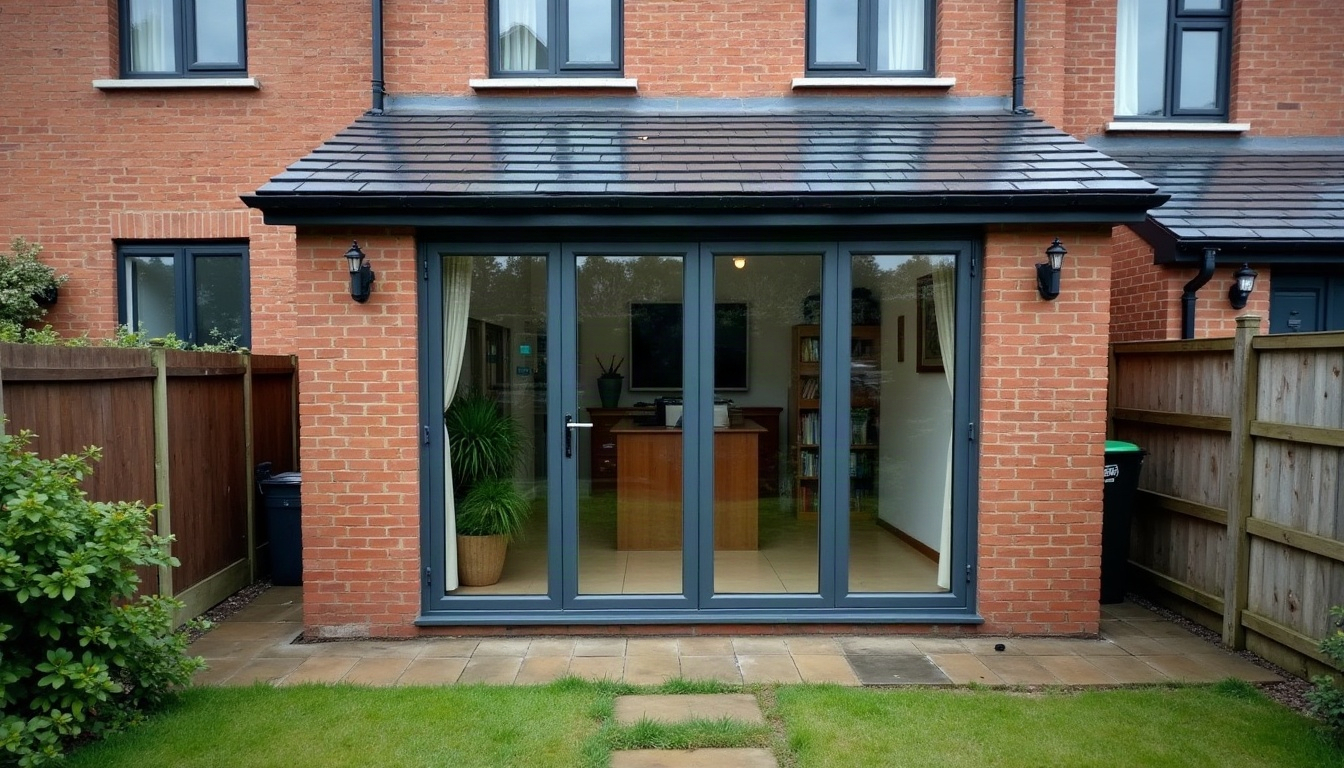
Remote work has settled into a pattern, and the pattern has a floor plan: somewhere in the house, a room that used to belong to guests now belongs to a job. Local pages for home additions Badin Lake tend to open with the same question, namely what the new room is actually for, and for a growing number of people the honest answer is “work”.
That matters to anyone running a company with people spread across a couple of time zones, and Irish startups with a stateside hire are exactly that. Our argument is that an extension is a slower, bigger and more permanent decision than renting a desk, that founders routinely underprice what comes with it, and that the cheaper answer usually wins. Usually. Not always.
The spare room has become infrastructure
A few years ago a home office was a laptop on the kitchen table and a promise to clear it away by six. Now it’s a standing arrangement. People who joined their employer remotely never had a desk to go back to, and employers who once treated the home as the employee’s own business have started to notice that a bad room makes for a bad working day.
Plenty of those homes are in places people chose for the way of life first and the job second. A lake community is a good example: the house is arranged around the water, the weather and the weekends, and the work has to find a corner of it. That’s fine until the corner is a dining table that also has to host dinner.
So the question lands in a founder’s inbox in an unexpected form. Picture a message from a colleague saying they’re thinking of building onto the house and asking whether the company has a view. Most founders have a policy for laptops and none at all for load-bearing walls.
It’s a fair question, and it deserves a better answer than a shrug. The honest one starts with what the person needs from the room, because “more space” is a feeling and “a door and a window that suit a four-hour call” is a brief. Builders tend to ask for exactly that brief, and founders who ask the same question first have a calmer conversation later.
Building a room is not the same decision as renting a desk
A desk is reversible. If the team shrinks, the co-working membership ends at the close of the month and nobody has to explain anything. An addition is the opposite: months of planning and building, a household disrupted while it happens, and at the end of it a room you can’t hand back when the job changes.
That’s before the practical questions. Structure, wiring and heating are work for licensed professionals, and a good builder will tell you plainly who does what and what has to be inspected. Anything near a shoreline tends to raise extra questions about what may be built and where, and the local building department is the body to ask. A contractor who works in the area will usually know which questions to bring, which is a better reason to talk to one early than any amount of browsing.
The Irish angle
Ireland’s home market is small enough that ambitious startups look abroad almost immediately, which is how a Dublin founder ends up with a colleague in North Carolina who has never seen the office. Enterprise Ireland and the usual advisers can help with the business side of going international. Nobody offers help with the spare room, and it turns out to be the unglamorous half of expansion.
The cheaper version of the same idea usually wins
Our first instinct was that the home extension is a vanity project of the remote era, the grown-up cousin of the standing desk. So we tested the idea against what a work room actually has to do. It needs light you can work by, a door that closes, some distance from the noise of the household, and a temperature that doesn’t fight you all day.
Most of that can be had by rearranging a room that already exists. A box room, a converted corner, a garage that has stopped being for cars: none of them is glamorous, and all of them cost less than new walls. The extension only earns its place when no existing room can be given a door and some quiet.
That does happen. Open-plan houses built for entertaining often have nowhere to take a call without an audience, and a lakeside house designed around a big shared space is a fair example. There, an addition stops being a luxury and becomes the only way to get what the job needs.
The square footage is the easy part of the argument.
The calendar is the budget line nobody checks
Founders think in runways, and a build has one too. Weather, inspections and the order in which trades arrive all set the pace, and the weather by a lake won’t always hand you a tidy schedule. The colleague who planned to be working in the new room by spring may spend that spring on the dining table with the sound of a saw next door.
It’s a point worth making to anyone tempted to treat an extension as a quick fix for a retention problem. Hiring someone, then asking them to endure months of building work in their own house, is a strange way to start a working relationship. If a team member decides to go ahead, the kind thing is flexibility on hours and noise for the duration, and not a standing expectation that the video call carries on regardless.
The room outlives the job
Here’s the part nobody is pricing in. A founder can end a contract in a quarter, and a person can change employer in a week. The extension stays for years, and its next owner may not need a work room at all. Whether that matters depends on the household’s plans, which is a question for the household’s own financial adviser or solicitor, not for a technology columnist.
What we can say is that the decision belongs to the person who lives in the house. A company’s role is to make the sensible version easy, which means being clear about what it will contribute and avoiding any pressure to build something simply because the team is distributed. Nobody should pour concrete because a calendar invite told them to.
There’s also a quieter point about fairness. If one remote hire has a spare room and another rents a bedroom in a shared flat, a policy that quietly assumes everyone can build is a policy for the people who already own their space. Founders who care about hiring widely will want a plan that works for both.
What next
- Write down what the room is for before anyone draws anything: light, a door that closes, quiet, a steady temperature. If an existing room can supply those, you’ve saved yourself a project.
- If you manage remote staff, decide what the company will and won’t contribute before the question arrives, and send tax and legal queries to a solicitor or adviser.
- If an extension is the answer, speak to a local builder early. Ask who handles structure, wiring and heating, what the local building department will need to see, and how a wet season affects the schedule.
- Price the dull alternatives honestly: a rearranged room, a co-working desk, a quieter hour of the day. They’re boring, and they’re reversible.
Verdict: rent the desk until you’re sure, and build the room only once you’re sure the job is the reason.