
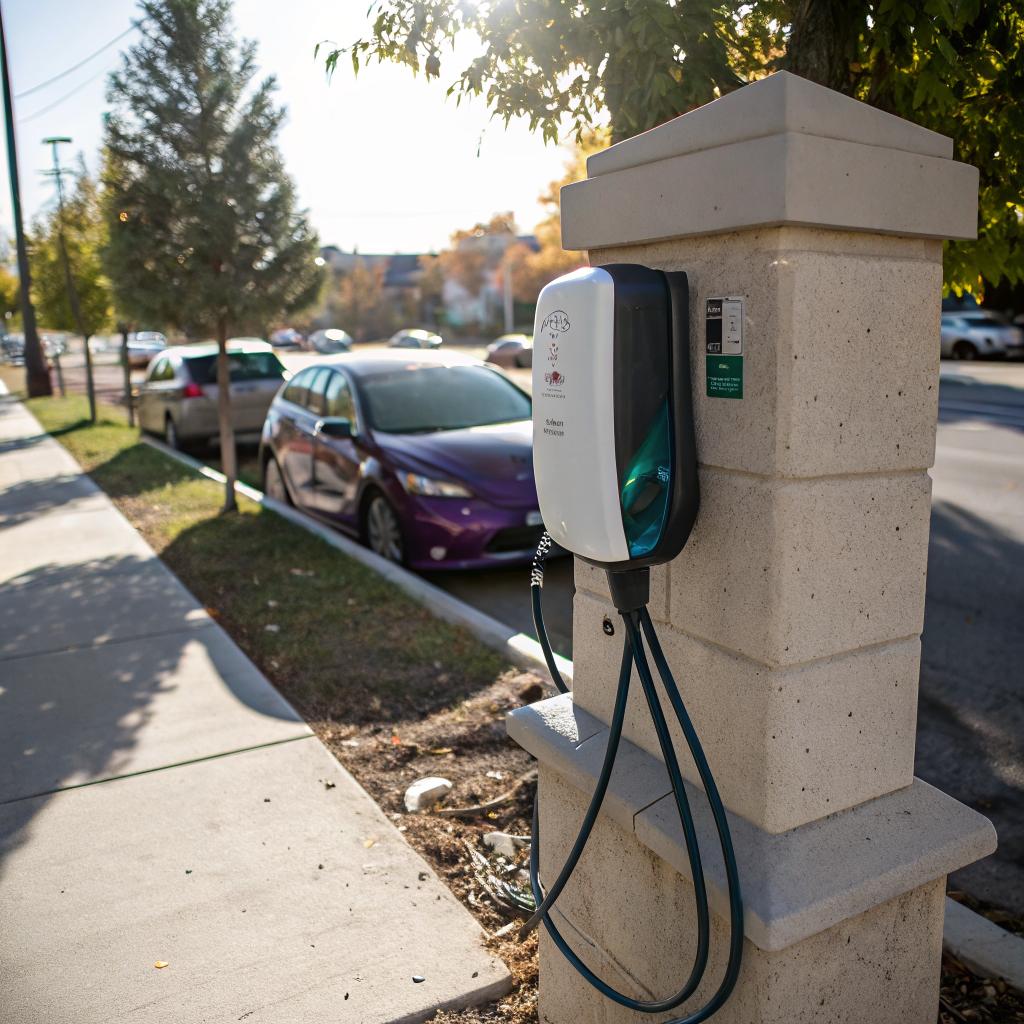
What if I told you the hardest part of getting an EV charger is not the hardware or the permit, but choosing what you actually want your charging setup to do for your business or building?
Most owners in Salt Lake City start with “I just need a charger” and then waste time, money, and wiring because they never clarified whether they are trying to attract customers, keep tenants happy, support employees, or just future proof a small parking lot. The charger is the easy part. The plan is the hard part.
If you only remember one thing, let it be this:
Before you buy any hardware or call an electrician, write down three things: who the charger is for, how many cars you expect at the same time, and what you want to measure or bill for. Everything else flows from that.
From there, the process for EV charger installation Salt Lake City UT is pretty straightforward: confirm your power capacity, pick a charger type that fits your actual use case, get a site visit from a licensed electrician familiar with local code, apply for the right permits, install with smart cable management, connect to WiFi or cellular if needed, and set clear usage rules. That is the short version.
Now let us slow down and go through it like a startup founder or tech person would: probing, a bit skeptical, and thinking about ROI, not just volts and amps.
Why tech-minded people approach EV chargers differently
If you are in tech or you run a startup, you are probably not just asking “Can I charge a car here?” You are asking questions like:
– Can I treat this as an amenity that helps with hiring?
– Can I collect data on usage?
– Can I bill users without turning myself into a utility?
– Can I expand from 2 chargers to 10 later without ripping everything out?
That mindset is an advantage, as long as it does not freeze you in endless decision loops.
Think of your first chargers like you would think of an MVP: small, functional, instrumented, and easy to expand if it works.
For Salt Lake City, there are a few context pieces you cannot ignore:
– Cold winters cut effective battery range, so more people want workplace or apartment charging.
– Older buildings in Sugar House, Central City, or Marmalade often have limited electrical capacity.
– Many newer developments already plan for EV rough-ins, but the details vary a lot.
You do not need to become an electrician. You just need enough knowledge to ask better questions and avoid solutions that look “smart” but do not match your actual use.
Step 1: Decide who the chargers are actually for
This sounds obvious, but most bad installs start here. If you are not clear about the primary user, everything gets fuzzy.
You only have a few main patterns.
- Founders or employees at a startup office
Office park, converted warehouse, or co-working space. People park for 6 to 9 hours. They do not need ultra fast charging, but they care about reliability and maybe simple cost sharing. - Tenants in multifamily housing
Apartment or condo, with assigned or shared spots. People charge overnight. Billing and fairness matter more than speed. - Retail or restaurant customers
People are there 30 to 120 minutes. You are using chargers to draw traffic and keep people on site longer. - Mixed use or “future proof” commercial
You are planning for buyers, investors, or future regulations. Your goal is flexible wiring and expansion, not just today’s demand.
If you are not sure which one you are, pick the top two and rank them. For example: “Employees first, visitors second” or “Tenants first, guests second.”
That priority will decide:
– How many chargers you need per space
– Whether you need software for billing
– Whether Level 2 is enough or if limited DC fast charging makes sense
Step 2: Understand the power basics without going crazy
You do not need to do your own load calculations, but you should be aware of a few big knobs.
| Type | Typical power | Use case | Rough charge rate |
|---|---|---|---|
| Level 1 (120V) | 1.4 kW | Home garages only, backup option | 3 to 5 miles of range per hour |
| Level 2 (240V) | 7 to 19 kW | Workplaces, apartments, commercial | 20 to 40+ miles of range per hour |
| DC fast charging | 50 to 350 kW | Highway, heavy traffic sites | 60 to 200+ miles in 20 to 40 minutes |
For almost all startups, offices, and multifamily properties in Salt Lake City, Level 2 is the sweet spot.
Why:
– Hardware and installation costs are manageable.
– Electrical service upgrades, if needed, are not insane.
– Most cars sit parked long enough that 20 to 30 miles per hour of charge is fine.
If cars are parked more than 3 hours at your property, Level 2 chargers will cover almost everything you need, without DC fast charger headaches.
DC fast charging is a different business model. It often involves utility coordination, bigger transformers, and much higher cost. Good option for a travel plaza or a large retail center near I 15, not for a 20 person startup office.
Step 3: Check your building’s electrical capacity
This is where many projects in Salt Lake stall.
I will be blunt: you cannot solve this part from your laptop. Someone has to open the panel and look.
You can, though, prepare smart questions for your electrician:
- What is our current service size? 200A, 400A, 800A, etc.
- Do we have any spare capacity, or is the panel already full?
- Are there big loads we do not use at the same time that could be managed? For example, electric heat, large HVAC, or equipment.
- Is our wiring path to the parking area straightforward, or are we crossing long distances or concrete?
Many SLC properties end up in one of these situations:
| Situation | What usually happens |
|---|---|
| Plenty of spare capacity | Install several Level 2 chargers at full output, no upgrade needed. |
| Limited capacity, small building | Use load sharing chargers or lower power per port, like 40A instead of 80A. |
| No capacity, aging service | Plan a service upgrade or start very small with 1 or 2 managed chargers. |
If you are in an older office around downtown, you may hit that third row. That is where many owners panic and want to quit.
From a startup lens, you might think:
“Does this justify a bigger project now, or should I install one or two chargers, see the usage data, then upgrade when it clearly pencils out?”
There is no single right answer, but treating it as staged investment usually keeps risk sane.
Choosing the right charger type for a startup or tech property
Now to the part people often jump to first: picking the box.
Networked vs simple “dumb” chargers
They are usually split into two big categories.
- Non networked chargers
No app, no billing, just plug and charge. Often cheaper, very reliable, limited control. - Networked “smart” chargers
Connected via WiFi or cellular. Let you control access, bill users, see usage reports, and sometimes do dynamic load sharing.
For a tech or startup audience, there is a temptation to always choose the smart option. More data, more control, API hooks, all that.
But there is a tradeoff:
– More features mean more setup, learning curve, and sometimes monthly fees.
– Some platforms feel clunky or are overkill for 3 chargers in a small lot.
So how do you choose?
Ask this:
– Do you need to bill specific users or groups?
– Do you care about detailed usage data for later expansion or lease talks?
– Do you plan to install more chargers later and want load sharing?
If you said yes to two or more, go networked.
If this is a small office, and the chargers are a perk that the company pays for, simple non networked can be fine. You can always upgrade later, but you might regret lost data.
Connector types and EV adoption in Utah
Utah EV adoption has been rising faster than people expected. Tesla used to dominate, but more non Tesla EVs are on the road now.
The good news: almost all modern public and commercial AC chargers use the same J1772 connector, and Teslas can use an adapter. With NACS (Tesla) gaining ground, newer chargers often offer both.
Your practical options for Level 2 chargers:
– J1772 only, with Tesla drivers using an adapter
– Dual standard stations that have NACS and J1772, or swappable cables
If you want to keep it simple and not overthink standards shifts, this is a reasonable rule:
Choose Level 2 chargers that support J1772 today but can be upgraded with NACS cables or adapters later, so you are not locked into a dead end.
You do not need to chase every new connector trend, but you also do not want to anchor yourself to something that will frustrate drivers in three years.
Public, semi public, or private access
For tech offices and startups, there is also a subtle access question.
Here are three modes that matter more than people think:
- Private access
Only employees or tenants. Often behind a gate or in a dedicated lot. Best for a startup office or apartment residents. - Semi public access
Employees, tenants, plus invited guests. You might share QR codes, RFID cards, or app access. - Public access
Anyone can pull in and charge. Good for retail, not so simple for small startups.
Each access type affects security, usage patterns, and your exposure to random drivers who park badly or unplug others.
If you are not aiming to be a mini charging business, keep it private or semi public at first. You can always flip to more public later if it makes sense.
Permits, code, and local realities in Salt Lake City
No one likes talking about permits, but ignoring this part causes delays and surprise costs.
What local code usually cares about
You do not need to read the NEC cover to cover, but the city and inspectors will care about:
- Correct wire size, conduit type, and breakers for the chosen charger rating
- Grounding and bonding for safety
- Accessibility rules for EV spaces under building and ADA codes
- Proper labeling of EV circuits and panels
- Protection for cables and equipment in parking areas with vehicles moving around
EV charging is no longer rare in Utah, so inspectors have seen many installs. That is a good thing. They are less surprised, but also stricter about doing it right.
You want an electrician who already knows what Salt Lake City inspectors look for. That tends to reduce the number of site visits needed.
Permitting checklist at a high level
Local details vary by property type, but you can expect:
- Electrical permit for the new circuits and chargers
- Sometimes a building permit if you are adding structures like canopies or new parking layout
- Plan review if you are doing a bigger multi charger project
What slows projects is often not the permit form itself, but missing drawings, unclear loads, or changes mid project.
If you are used to fast software deployments, the pace of inspection cycles might feel archaic. That does not mean you can skip it.
Who should own the process
In a startup, there is a bad habit of giving facilities tasks to “whoever is least busy right now.” For EV charging, that can backfire.
Someone needs to actually:
– Talk to the electrician and understand the proposal
– Coordinate with the landlord if you are leasing
– Track permit status
– Decide on access and billing policy
If you are the founder or an early employee, it might be you. If your company is bigger, this might live with operations or workplace management.
Whatever you do, do not treat it as a side chore. Your choices here lock in costs and user experience for years.
Money: costs, incentives, and basic ROI thinking
You asked for a startup guide, so ignoring the financial side would be silly.
What EV chargers usually cost in SLC
Numbers vary, but ranges can help your mental model.
| Item | Typical range per port | Comments |
|---|---|---|
| Level 2 hardware | $500 to $2,000 | Non networked at the low end, smart/networked at the high end. |
| Installation (simple) | $800 to $2,000 | Short runs, no service upgrade. |
| Installation (complex) | $2,000 to $7,000+ | Long trenching, panel upgrades, coring through concrete. |
Prices can shift with copper costs, labor rates, and site quirks, but this gives a realistic band.
Startups often focus only on hardware, then are surprised when trenching through an old asphalt lot costs more than the charger.
Billing models that actually work in practice
Once you install, how do you handle payment?
You have a handful of options:
- Free charging as a perk
Easiest operationally. The company absorbs the cost, like coffee or WiFi. Works for small teams or high margin businesses. - Flat monthly fee
You charge tenants or employees a fixed amount per month for access. Simpler than per kWh billing. - Per kWh or per session billing
Use networked chargers to charge by energy used or time plugged in. Good for apartments or larger offices.
For a tech startup, you might be tempted to recoup every cent. That is one path. There is also a case for treating EV charging like bike racks: a relatively cheap way to support people and signal values.
What matters is that you set some policy before the chargers go live. Otherwise you end up with someone leaving their car plugged in for 8 hours every day while others circle.
Simple ROI framing that does not feel fake
Instead of inventing a magical ROI number, try this framing:
– What would it cost us, per month, to lose one good employee because our workplace feels dated or inconvenient?
– What would it cost us, per month, to keep two EV driving tenants who might leave for a more modern building?
– What is our monthly out of pocket for electricity and any network fees?
If 2 or 3 chargers cost you a few hundred dollars per month including electricity, and they help retain talent or tenants that are each worth thousands of dollars a year, the math is not hard.
That does not mean you should waste money. It just shifts the question from “Do chargers pay for themselves through direct billing?” to “Do chargers support bigger priorities like hiring, retention, or occupancy?”
Planning the physical layout in SLC parking realities
Now to the concrete and asphalt part.
Where to place chargers in the lot or garage
Good placement solves many small problems.
Think about:
- Shortest electrical path
Putting chargers near the building or electrical room usually saves on installation cost. - ADA and accessibility
You may need at least one accessible EV space, depending on how many spaces you add and the type of property. - Snow and weather
Salt Lake snow and slush can affect cable handling, parking lines, and bollards. - Parking culture
If people often park crooked or double park, you want chargers where cables will not get driven over constantly.
If you are used to thinking in floor plans and user journeys, treat the lot like a small app:
– Where does a driver enter?
– Where would they naturally park first?
– How do they handle the cable?
– How do they know whether they are allowed to plug in?
You do not need a beautiful render. A rough sketch on paper that you review with your electrician is already ahead of what most people do.
Cable management and signage
It sounds minor, but cable mess can ruin user experience and annoy property managers.
You can choose:
– Wall mounted reels for cables
– Pedestal systems with spring loaded arms
– Simple hooks on the pedestal
For a startup budget, hooks and short cable runs are often enough.
Signage should be boring and clear:
– “EV charging only while actively charging”
– “4 hour limit, then move your vehicle”
– “Reserved for tenants 6 pm to 6 am” or similar rules
If you do not write it down and post it, you will end up mediating arguments by email.
Software, data, and future proofing for tech-minded owners
Here is where your tech background actually gives you a big edge.
What data from chargers is actually useful
Most platforms pitch dashboards full of charts. Many are not really needed.
The metrics that usually matter are:
- Number of charging sessions per day or week
- Average session length
- kWh per month per port
- Peak concurrent sessions (how many cars at once)
You can use these to answer real questions:
– Are the chargers constantly busy? You might need more.
– Are sessions often short? Maybe your chargers are pulling in casual visitors, not just employees.
– Is usage concentrated to certain hours? That affects how you negotiate with the utility later.
This is also useful if you ever talk to investors, buyers, or landlords. You will have concrete numbers, not just “people seem to use them a lot.”
APIs and integration: nice to have or distraction?
Some charger networks offer APIs. As a tech person, that can be tempting. Automations, internal dashboards, Slack alerts when someone’s car is done, and so on.
The question is not “Can we integrate this?” but “Should we?”
Good use cases:
– Single sign on with your office access system
– Reporting usage into your existing analytics tools
– Automated cost sharing or reimbursements
Questionable use cases:
– Custom gamification for a 10 person team that will get bored in a week
– An internal app that ends up needing maintenance every time the charger firmware updates
If you are a product focused company and treat this as a fun side project, fine. Just be honest that it is not core business.
Planning for expansion without overbuilding
You do not need to install 20 chargers on day one. What you should do, though, is think about future flexibility in wiring.
Options that often make sense:
- Install conduit and panel capacity for more ports than you actually activate now.
- Use networked chargers that can share power if new units are added.
- Locate chargers in a cluster where it is easy to add more stands later.
You can think of it like pulling fiber in a new office even if you do not need every drop on day one.
If your electrician says “Adding two more in this location later will be cheap” you are in good shape. If they say “We will have to trench again,” push back and see if better routing is possible now.
Working with landlords, HOAs, and partners
If you own your building, your life is simpler. Many readers, though, lease or share control with others.
For startups in leased offices
You will probably need landlord approval. They will care about:
– Who pays for the installation
– Who owns the hardware
– What happens at the end of the lease
– Impact on common areas and other tenants
A few tips that tend to help:
- Offer to share usage data with the landlord. It helps them justify future installs.
- Clarify whether the chargers are trade fixtures you remove, or improvements that stay.
- Propose simple rules for employee use, so the landlord does not fear complaints.
If the landlord is wary, starting with 1 or 2 chargers as a pilot often calms things down.
For condos and HOAs
This can be more political than technical.
Questions that come up:
– Can individual owners install their own charger in their assigned space?
– Should the HOA install shared chargers and bill residents?
– How is cost shared between owners who drive EVs and those who do not?
There is no universal formula. One pattern that works in many Salt Lake multifamily buildings:
– HOA installs 2 to 4 shared chargers in guest or common spaces.
– Residents pay a higher per kWh rate to fund expansion.
– HOA uses usage data to justify more chargers over time.
The key is to keep the first step small enough that it does not trigger huge fights.
Realistic project timeline from idea to first charge
Let me sketch a typical small project for 2 to 4 Level 2 chargers at a startup office or small apartment in Salt Lake City.
Rough phases and timing
| Phase | What happens | Typical duration |
|---|---|---|
| 1. Clarify goals | Decide who chargers are for, how many you want now, how you plan to bill. | 1 to 2 weeks |
| 2. Site visit and quote | Electrician inspects panels, parking, runs rough load check, gives proposal. | 1 to 3 weeks |
| 3. Permits and approvals | Permit application, landlord or HOA sign off if needed. | 2 to 6 weeks |
| 4. Installation | Trenching, mounting chargers, wiring, labeling. | 1 to 5 days |
| 5. Inspection and activation | City inspection, testing, software setup, first users onboarded. | 1 to 2 weeks |
Realistically, you are looking at 1.5 to 3 months for a straightforward project, assuming you do not stall at any step.
If that feels long compared to shipping a feature, remember you are mixing construction, electrical work, and city processes.
Common mistakes tech and startup teams make with EV chargers
Let me call out a few patterns I have seen, because they repeat a lot.
Overengineering the first install
This might sound familiar.
– You spend weeks comparing every charger brand.
– You draw complex future phased diagrams.
– You overthink integrations that no one will use.
Meanwhile, no one can charge their car.
If that is you, ask: “What is the minimum useful system we can install in the next 60 days, with room to grow?”
Ignoring user behavior
You might assume:
– People will always move their cars when charged.
– No one will park an internal combustion engine in an EV spot.
– Everyone will read the email you send about charger rules.
Those assumptions will be wrong.
To compensate, you can:
- Use software that sends a push notification or text when charging is done.
- Set time limits or idle fees on networked chargers.
- Have very simple, visible signage and maybe a short internal FAQ.
Treat charger etiquette as a product adoption issue, not just “common sense.”
Not leaving room for change
EV tech will keep evolving. Vehicle batteries, connectors, charging speed, even grid rules.
You do not need to chase every trend, but you should avoid hard locking:
– Do not pour tons of concrete around a low quality charger that will be painful to replace.
– Do not wire for maximum power if your building is already tight on capacity unless it is part of a bigger upgrade plan.
– Do not commit to weird proprietary systems just because the app looks shiny.
Pick conservative, standards based hardware from brands with a track record, and focus your “smart” energy on how you use and expand it.
Quick Q&A to tie things together
Q: If I run a 20 person startup in Salt Lake City, how many chargers do I actually need?
A: Start with 2 Level 2 chargers, installed where you can easily add 2 more. Monitor usage for 6 to 12 months. If both ports are busy more than half the workday, add more. It is better to fill a small system and justify growth than install 8 ports that sit idle.
Q: Should I wait for standards and tech to settle before installing anything?
A: If your building or business would benefit today, waiting for perfect stability is an excuse. Level 2 charging on 240V with J1772 and support for NACS is not going away. Focus on solid hardware and good wiring, and expect that cables or software might be updated later.
Q: Is it realistic to treat chargers as a profit center for a small property?
A: For most small offices or modest apartment buildings, no. They are better seen as retention and attractiveness tools. You can charge users enough to offset electricity and some of the install costs, but building a real profit engine from a few chargers is rare. If you want a charging business, that is a different project with different math.
If you step back and think about your building the way you think about a product roadmap, what is the smallest EV charging setup you can put in place this quarter that people would actually use, and that future you will not regret?